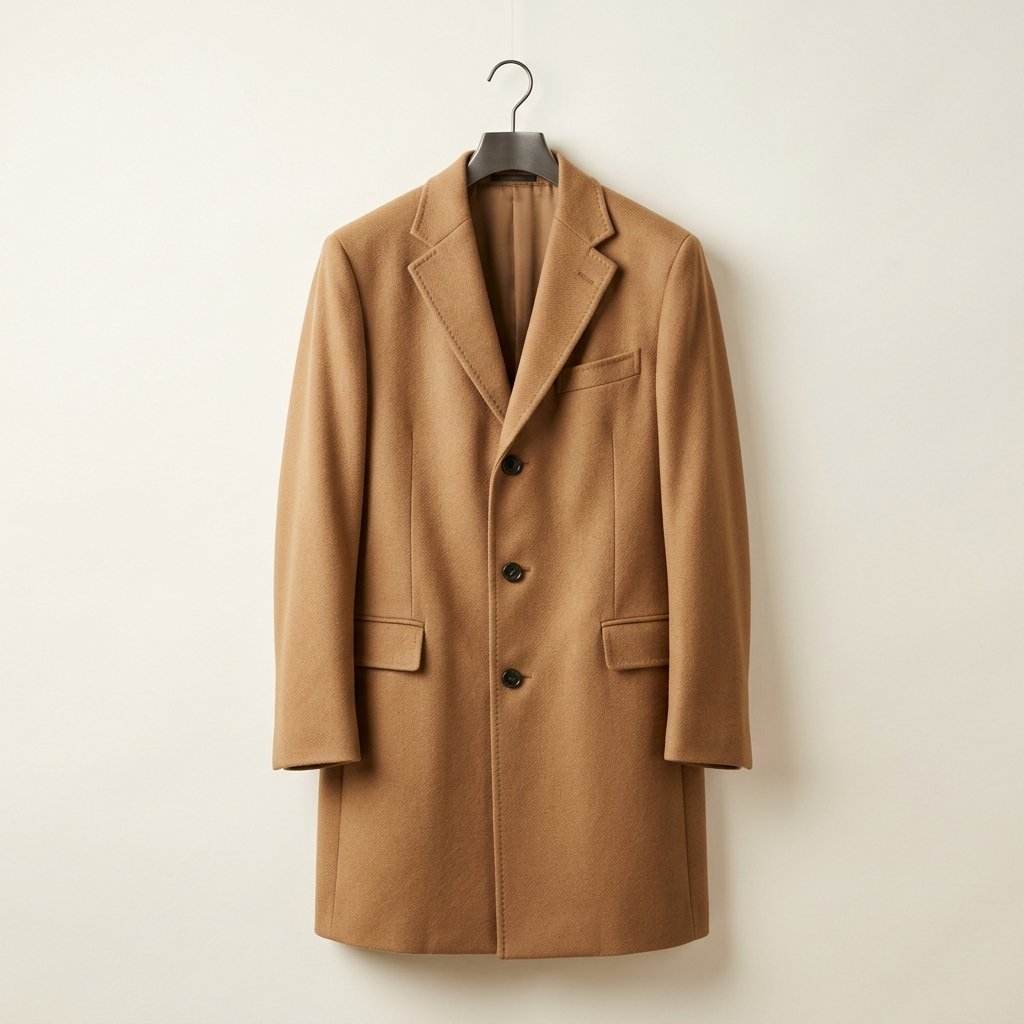
The Anatomy of Bespoke Outerwear: Double-Faced Cashmere & Hand-Split Seams
Outerwear represents the ultimate test of a tailoring house. Unlike lightweight shirting or knitwear, an overcoat must fulfill conflicting structural mandates: it must be a fortress against winter elements, yet flow with unencumbered grace; it must feel weightless across the shoulders, yet retain architectural poise without excessive synthetic interfacings.
In this technical masterclass from our Fontana atelier, we examine the demanding artisan techniques behind double-faced fabric construction, hand-split seams, and floating horsehair canvassing that define the GRANCIS outerwear collection.
What is True Double-Faced Cloth?
Most commercial winter coats are constructed from a single layer of wool backed by a synthetic polyester lining. Double-faced cloth, however, is a pinnacle textile engineering feat. Two independent layers of exquisite wool or Mongolian cashmere are woven simultaneously on specialized double-beam looms, joined together across their entire expanse by micro-threads of pure silk or fine yarn.
The result is a singular cloth that exhibits identical face quality on both the exterior and the interior. Because both sides of the garment present pristine natural wool, there is no necessity for synthetic polyester linings that trap perspiration and crackle under movement. A double-faced coat breathes dynamically with the wearer’s body heat.
The Artisan Rite: Hand-Splitting the Seams
The true marvel of double-faced tailoring lies in how the garments are assembled. Standard industrial sewing machines cannot construct a double-faced coat without exposing raw, unfinished fabric edges. Each seam on a GRANCIS coat must be meticulously hand-finished:
- 1. The Manual Split: Using an ultra-sharp surgical blade or miniature tailor’s knife, the artisan manually slices open the joined layers of cloth along the edge to a precise depth of 12 to 15 millimeters.
- 2. The Inward Fold: Both raw edges of the fabric are carefully folded inward toward one another, concealing all frayed threads entirely within the pocket of the cloth.
- 3. Invisible Blind Stitching: Working under artisan magnification, our seamstresses hand-stitch the folded edges closed using ultra-fine silk thread with microscopic blind stitches—often averaging 4 to 5 stitches per centimeter.
A single GRANCIS trench or overcoat demands upwards of twenty hours of manual hand-splitting and blind-stitching. When viewed from either the interior or exterior, every seam appears seamless, soft, and completely reversible.
"When craftsmanship reaches its zenith, the stitching vanishes entirely, leaving only pure proportion and drape."
Natural Drape and Generational Lifespan
Without stiff chemical adhesives or artificial fusibles, a hand-split double-faced coat moves like liquid fabric across the body. It drapes naturally over tailored suit jackets or chunky knitwear, maintaining an unbroken, fluid line whether belted tight against a storm or worn open in a transatlantic salon. It is outerwear elevated from seasonal utility to timeless architectural art.